Barron’s Law – Congressman Brandon Gill Puts English Proficiency at the Center of Highway Safety
The tragic death of eight year old Barron Ritchey should never have happened.
In April 2023, Barron was returning home from a school trip with his mother when a wheel hub and dual tires separated from a tractor trailer on Interstate 35 near Hillsboro, Texas, and struck their SUV. Barron was killed. According to Congressman Brandon Gill’s office, the driver of the tractor trailer was in the United States on a B1 visa that had expired six months earlier.
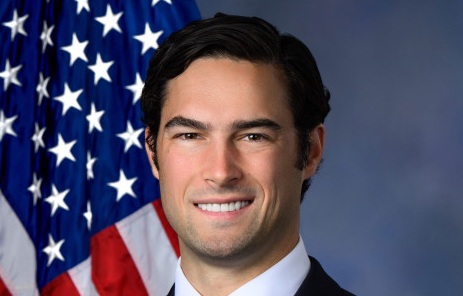
Three years later, Congressman Gill introduced legislation bearing Barron’s name. Barron’s Law, formally the Trucking Safety and Accountability Act of 2026, seeks to strengthen commercial trucking safety by addressing driver eligibility, English proficiency, fraud, employer responsibility, and enforcement.
For ProEnglish, the legislation is especially important because it recognizes a principle we have emphasized for years. English proficiency has practical consequences. When someone is operating a commercial vehicle on America’s highways, the ability to understand and communicate in English can become a matter of public safety.
Congressman Gill has been a strong supporter of ProEnglish’s efforts to strengthen the role of English in American civic life. Recognizing that shared commitment, he said:
“ProEnglish is a leading advocate for ensuring national cohesion and promoting English as the official language of the United States. I am grateful for their work and have been proud to partner with them on my English Language Proficiency.”
The English Language Proficiency Act referenced by Congressman Gill is separate legislation concerning English and civics requirements for naturalization. Barron’s Law, the focus of this article, concerns commercial trucking safety. Although the bills address different issues, both reflect Gill’s emphasis on the importance of English proficiency.
Barron’s Law would require English language proficiency testing as part of the process for obtaining or renewing a commercial driver’s license or commercial learner’s permit. The testing would determine whether a driver can understand the English necessary to operate a commercial vehicle safely, including road signs, safety instructions, spoken directions, emergency communications, logs, reports, and other required documentation.
This should be a basic expectation.
Commercial drivers operate vehicles that can weigh tens of thousands of pounds. They may need to communicate with police officers or emergency personnel, understand warnings and construction signs, respond quickly to changing road conditions, or follow critical safety instructions. There is little room for misunderstanding when the consequences can be so serious.
Barron’s Law would also strengthen requirements concerning the lawful status and employment authorization of commercial drivers and impose significant penalties on motor carriers that knowingly use drivers who do not meet the required qualifications. It also addresses so called chameleon carriers, companies that attempt to continue operating through another name or affiliated business in order to escape safety sanctions, penalties, or a poor compliance record.
This broader approach matters because responsibility for highway safety does not belong to the driver alone. The companies hiring commercial drivers, the authorities issuing licenses, and the agencies enforcing the law all have a role in protecting the public.
At the heart of the legislation, however, is Barron.
His family described him as joyful, loving, and funny. He loved his family and friends, enjoyed playing with his dog Cowboy, and especially loved making people laugh. In the years following his death, the Ritchey family said they came to believe that what happened reflected a series of failures involving the transportation and immigration systems.
Their hope is that reforms made in Barron’s name will help prevent another family from experiencing the same devastating loss.
Congressman Gill’s work on Barron’s Law also follows his broader commitment to English in American life. Earlier this year, he introduced the English Language Proficiency Act, which would eliminate age based exemptions from the English and civics requirements for naturalization. The legislation does not create a new English requirement. It would apply the existing standard more consistently to those seeking American citizenship.
Gill also became a cosponsor of H.R. 1772, the Designation of English as the Official Language of the United States Act of 2025, another important priority for ProEnglish.
These measures address different areas of public policy. Barron’s Law concerns commercial trucking safety. The English Language Proficiency Act concerns naturalization. H.R. 1772 concerns English as the official language of federal government operations. Together, they reflect the practical importance Gill places on a shared language in American public life.
For ProEnglish, Barron’s Law demonstrates something that can sometimes be lost in the national discussion about language. A common language is not simply about tradition. It allows Americans to understand one another, participate more fully in civic life, and communicate clearly when it matters most.
On our highways, that principle becomes immediate. Someone entrusted with operating a commercial vehicle should be able to read the signs ahead, understand safety instructions, communicate with law enforcement, and respond effectively in an emergency.
Nothing Congress does can return Barron Ritchey to his family. But Congress can learn from the circumstances surrounding his death and strengthen the safeguards intended to protect other Americans.
Barron’s Law seeks to do exactly that.
By strengthening commercial driver requirements, improving carrier accountability, confronting fraud, and requiring demonstrated English proficiency, Congressman Brandon Gill’s legislation seeks to establish clearer standards before another family is forced to ask why those standards were not already in place.
For ProEnglish, the principle is clear. English proficiency is not only a matter of national cohesion. In the right circumstances, it is also a matter of responsibility and safety.
Ellen Hamilton-Cotten
Executive Director, ProEnglish
About Post Author